Why Gutters Matter More Than You Think (Texas Clay Soil Edition)
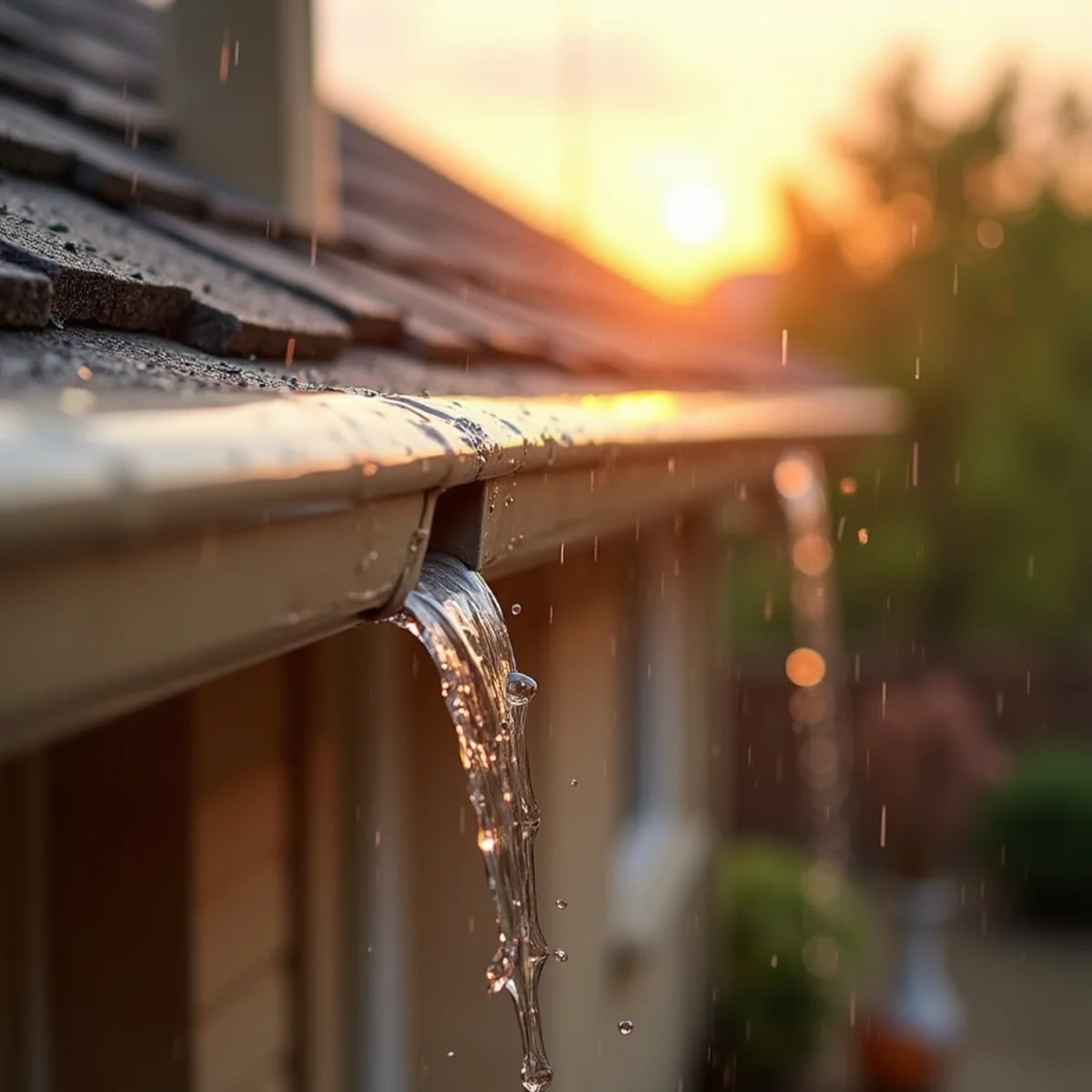
Gutters are probably the least exciting thing on your house. Nobody brags about them at a barbecue. But in North Texas, a good gutter system is one of the cheapest, smartest ways to protect the single most expensive thing you own — your foundation. And the reason comes down to what your house is actually sitting on: expansive clay soil that moves with the weather.
Here in the Fort Worth area, foundation repair routinely runs $5,000 to $15,000 or more, and in bad cases far beyond that. A complete seamless gutter system costs a small fraction of that. Once you understand how our soil behaves, gutters stop looking like an accessory and start looking like cheap insurance on a very expensive slab of concrete.
Expansive clay soil, explained
North Texas sits on the Blackland Prairie — a band of dark, fertile expansive clay that stretches through Fort Worth, Arlington, and most of the DFW metroplex. Farmers love it. Foundations hate it. The clay is packed with minerals that soak up water like a sponge, and that single property is behind a huge share of the foundation problems in our region.
The mechanics are simple. When clay gets wet, it swells and pushes upward and outward. When it dries out, it shrinks and pulls away, leaving gaps and voids. A slab foundation sitting on top of that soil rides those movements — lifting in one spot, dropping in another. Do that season after season and the concrete cracks, and everything attached to it slowly goes out of square.
The shrink-swell cycle that never stops
Our clay can change volume by as much as 30% between soaking-wet and bone-dry. A wet spring followed by a brutal Texas summer drought puts your foundation through a full swell-then-shrink cycle every single year. The goal of good drainage isn't to keep the soil dry — it's to keep the moisture around your foundation even and stable, so one corner isn't swimming while another is cracking apart.
How water wrecks foundations
Now picture a heavy Texas thunderstorm with no gutters. Thousands of gallons sheet straight off your roof edge and hammer the ground in a narrow strip right against your foundation. That soil gets soaked and swells hard. Meanwhile the clay under the center of your slab — and the sides shielded by an overhang — stays comparatively dry. You've just created exactly the uneven moisture the clay hates.
Gutters fix this by collecting all that roof runoff and carrying it to downspouts, which move it away from the house. Instead of a moat of saturated clay heaving against the perimeter, the water is discharged several feet out where it can't destabilize the slab. That's the whole job — and it's why gutters matter more than most homeowners think.
Not sure whether your drainage is already causing trouble? These are the warning signs we tell Fort Worth homeowners to watch for:
- Doors and windows that stick or suddenly won't latch — a classic symptom of a shifting foundation.
- Cracks in interior drywall, especially running diagonally from the corners of door frames and windows.
- Cracks in exterior brick or mortar, or gaps opening where the brick meets trim and window frames.
- Sloping or uneven floors, or the feeling that one part of a room is quietly sinking.
- Pooling water or splashed-out, eroded soil along the foundation after a storm — a sign roof runoff has nowhere to go.
- Gaps between the soil and your foundation during dry spells, sometimes wide enough to slip your hand into.
Downspout placement and sizing
Gutters are only half the system. The downspouts are what actually get water away from your foundation, and this is where a lot of cheap installs fall short. As a rule, you want a downspout for roughly every 30 to 40 feet of gutter run, and each one should discharge at least 4 to 6 feet from the house — farther on the uphill side of a sloped lot.
Sizing matters too, because Texas doesn't do gentle rain. Our downpours can drop several inches an hour, and undersized gutters simply overflow — which dumps water right back against the foundation and defeats the entire purpose. For most homes we recommend larger 6-inch seamless gutters with properly sized 3x4-inch downspouts, plus splash blocks or buried drain extensions to carry water out past the flowerbeds. Getting this layout right is the core of a professional gutter installation.
You can buy the best roof in Fort Worth, but if the water coming off it pools against your slab, the ground will still move — and the house will move right along with it.
Gutter guards: worth it in North Texas?
North Texas is hard on gutters in another way: trees. Live oak, pecan, and cedar elm shed constantly, and a gutter packed with leaves and shingle grit doesn't drain — it overflows exactly like an undersized one. Clogged gutters also hold standing water and dead weight that can pull the whole system loose from the fascia.
Gutter guards are worth considering, especially if you've got mature trees near the roofline. A quality guard keeps out leaves, pecan hulls, and debris while letting water through, which cuts down on the ladder-and-scoop routine and keeps the system flowing during the storms that matter most. They aren't fully maintenance-free, but they dramatically reduce how often anyone has to get up there and clean things out.
Bundle gutters with your roof and save
If you're already planning a roof replacement, that's the smartest possible time to add or replace gutters. The crew is already set up, the ladders and safety gear are already on site, and the new gutters can be tied in cleanly with fresh drip edge and flashing for a watertight edge. Doing both at once almost always costs less than two separate trips — and it means your brand-new roof isn't draining through a tired, sagging gutter system.
It's also the right sequence. Gutters come off for a tear-off anyway, so pairing the projects avoids paying to reinstall old gutters you'll want to replace soon regardless. If a new roof is on your horizon, ask about bundling gutters when you book your free roof replacement estimate — the combined quote is usually a pleasant surprise.
Written by the SkyCloak Roofing & Solar team
Practical roofing advice from the Fort Worth crew that's actually up on the roof, led by owner Shawn Cummings. We write what we'd tell our own neighbors — no sales fluff. Meet the team →
Frequently Asked Questions
Related Reading
All articles Maintenance
The Hidden Reason Texas Roofs Die Early: Attic Ventilation
Your last roof probably didn't die of old age — it cooked from the inside. Here's how attic ventilation quietly decides whether a Texas roof reaches its rated life, and how to tell if yours is breathing.
Read article Storm Damage
Emergency Roof Tarping: What It Is, What It Costs, and When You Need It
A calm, safety-first guide to emergency roof tarping in Fort Worth — what a tarp actually protects, why you shouldn't climb a wet roof, what it costs, and how it fits your claim.
Read article Costs
CostsHow Much Does a Roof Replacement Cost in Fort Worth? (2026 Guide)
A clear, no-hype breakdown of what a new roof actually costs in Fort Worth in 2026 — by material, what moves the price, and how to get an exact number.
Read articleWhy homeowners trust us
Our Promise to You
No pressure, no gimmicks, no storm-chasing. Here's what every SkyCloak customer can count on — in writing.
- Free 21-point roof inspections
- Honest, repair-first recommendations
- Adjuster-ready photo documentation for claims
- In-house, background-checked crews
- Manufacturer warranties registered in your name
- Magnetic nail cleanup & final walkthrough
Fully Insured — General Liability Coverage
Proof of insurance provided before any work begins — just ask.
Free inspections
Put this advice to work on your roof
A free, no-pressure SkyCloak inspection turns everything you just read into a clear plan for your home — with photos and honest options.