What to Do in the First 48 Hours After a Texas Hailstorm

The storm has passed, the sky is clearing, and you're in the yard staring at a lawn full of melting ice and a roof you're suddenly not sure about. If your pulse is still up, take a breath — you have more time than this moment feels like, and the steps that protect your home and your insurance claim are simple once you know the order to do them in.
North Texas sits squarely in what insurers call 'Hail Alley,' and Tarrant County absorbs some of the hardest-hitting storms in the country. That's the hard part. The reassuring part is that this process is well-worn — thousands of Fort Worth homeowners file hail claims every spring, and the ones who come out ahead do the same handful of things early. Here's the whole plan at a glance, then each step in detail.
- Make sure every person and pet is safe, and scan for obvious hazards before you give the roof a second thought.
- From the ground, photograph and video everything — roof, gutters, screens, siding, and any dented vehicles.
- Write down the date and time the storm hit, and save local weather or news reports.
- Contain any active leaks with buckets and move valuables out from under them.
- Cover broken windows or exposed areas with a tarp — but never climb onto a wet, hail-covered roof.
- Book a free professional roof inspection to find the damage you can't see from the ground.
- Call your insurance company to report the storm and confirm your deductible and filing window.
- Keep every receipt, and hold off on signing any contract until you understand your options.
Safety first
Before anything else, treat your property like the aftermath of a serious storm — because it is. Walk it carefully and watch for downed power lines, the smell of gas, loose branches, and broken glass hidden in the grass. If you see a downed line or smell gas, leave the area and call your utility or 911. Never approach it yourself.
Inside, check your ceilings and light fixtures for water stains, bubbling paint, or any sag, which can signal water already pooling above the drywall. If water is dripping, set out buckets, move electronics clear, and if it's near a fixture or outlet, shut off power to that area at the breaker. Then resist the urge to climb up and inspect the roof yourself — a wet roof covered in loose hail is genuinely dangerous, and that's what a professional inspection is for. If you have an active, worsening leak, that's exactly when to call for emergency roof repair; SkyCloak answers 24/7 and can get a temporary cover in place fast.
Document everything
Your phone is the most valuable claim tool you own in these first two days. From the ground, take wide shots and close-ups of the roof, gutters, downspouts, window screens, siding, your AC unit, and any vehicles that were caught outside. Shoot video too, narrating what you see and the date.
Pay special attention to soft metal. Dented gutters, downspouts, AC fins, and screens are what adjusters treat as 'collateral evidence,' and clear denting there helps confirm the size of the hail that struck your shingles. Save the day's weather reports and note the date and time the storm rolled through. You're building a simple, honest record — and the stronger it is, the smoother every step that follows. As our guide on whether insurance covers a roof replacement in Texas explains, thorough proof is often the difference between a partial repair and a full approval.
Get a free professional inspection
Here's the part that surprises people: most hail damage to a roof is invisible from your driveway. Hail doesn't always punch holes — more often it bruises the shingle, knocks the protective granules loose, and fractures the mat underneath — damage that quietly shortens your roof's life but takes a trained eye up close to spot. A driveway view can't tell the whole story.
A reputable local roofer will inspect your roof for free and give you a straight answer — including, sometimes, 'you don't have enough damage to file yet,' which is exactly the kind of honesty you want. Getting a free storm damage inspection before you call your insurer means you'll know what you're dealing with and can make an informed decision, not a rushed one. Ask for photos of whatever they find; a good inspector documents everything and hands it to you.
Calling your insurance
Once you know you have real damage, report the claim to your insurer promptly. Have your policy number, the date of loss, and your documentation ready. Two things trip up Texas homeowners here, so know them going in.
First, your deductible. Many Texas policies carry a separate wind-and-hail deductible that's a percentage of your home's insured value — often 1% or 2% — not a flat dollar amount, so it can be larger than you expect. Second, your filing window: policies require prompt notice, and while Texas law gives you time, waiting invites trouble as evidence fades and crews book up. When the adjuster comes out, have your roofer meet them on-site and walk the roof together so nothing legitimate gets missed.
The homeowners who come through a hailstorm in the best shape aren't the ones who move fastest — they're the ones who document first and sign last.
Avoiding storm-chaser scams
Within a day or two of any big Texas hailstorm, the door-knocking begins. Some of it is fine; plenty of it is not. 'Storm chasers' are out-of-town crews that follow the weather, sign as many contracts as they can, and are three states away by the time a problem shows up. You can usually spot them by the pressure they bring.
An offer to 'waive' your deductible is a red flag
In Texas it is illegal for a contractor to pay, absorb, or rebate your insurance deductible — an offer to do so is a form of insurance fraud, and it tells you exactly how that company operates. The same goes for anyone pushing you to sign an 'assignment of benefits' that hands them control of your claim. Reputable roofers don't need these tricks.
Protect yourself with a few simple rules: don't sign anything on the spot, don't pay a large deposit up front, and don't hand over your claim to someone you just met. Look for a company with a verifiable local address, a real reputation you can check, and proof of license and insurance. An established Fort Worth roofer will still be here next spring — which is the entire point of a roof.
Your timeline & deadlines
How fast do you really need to move? The first 48 hours are about safety, documentation, and stopping the damage from getting worse — tarps, buckets, photos, and a phone call or two. Permanent repairs come later, after your claim is approved — and that's completely normal. What you don't want is a small leak sitting for weeks, turning a shingle problem into rotted decking, soaked insulation, or attic mold.
Keep every receipt for tarps, buckets, and any temporary fixes — insurers typically reimburse reasonable emergency repairs. And don't sit on the claim itself: between fading evidence and the scramble for adjusters and crews after a regional storm, the homeowner who calls in week one is in a far better spot than the one who waits until month six. Calm and prompt beats panicked and fast every time.
Written by the SkyCloak Roofing & Solar team
Practical roofing advice from the Fort Worth crew that's actually up on the roof, led by owner Shawn Cummings. We write what we'd tell our own neighbors — no sales fluff. Meet the team →
Frequently Asked Questions
Related Reading
All articles Insurance
Does Homeowners Insurance Cover Roof Replacement in Texas?
A straight-talking guide to when Texas homeowners insurance pays for a roof replacement — what's covered, how ACV and RCV differ, and how to protect your claim.
Read article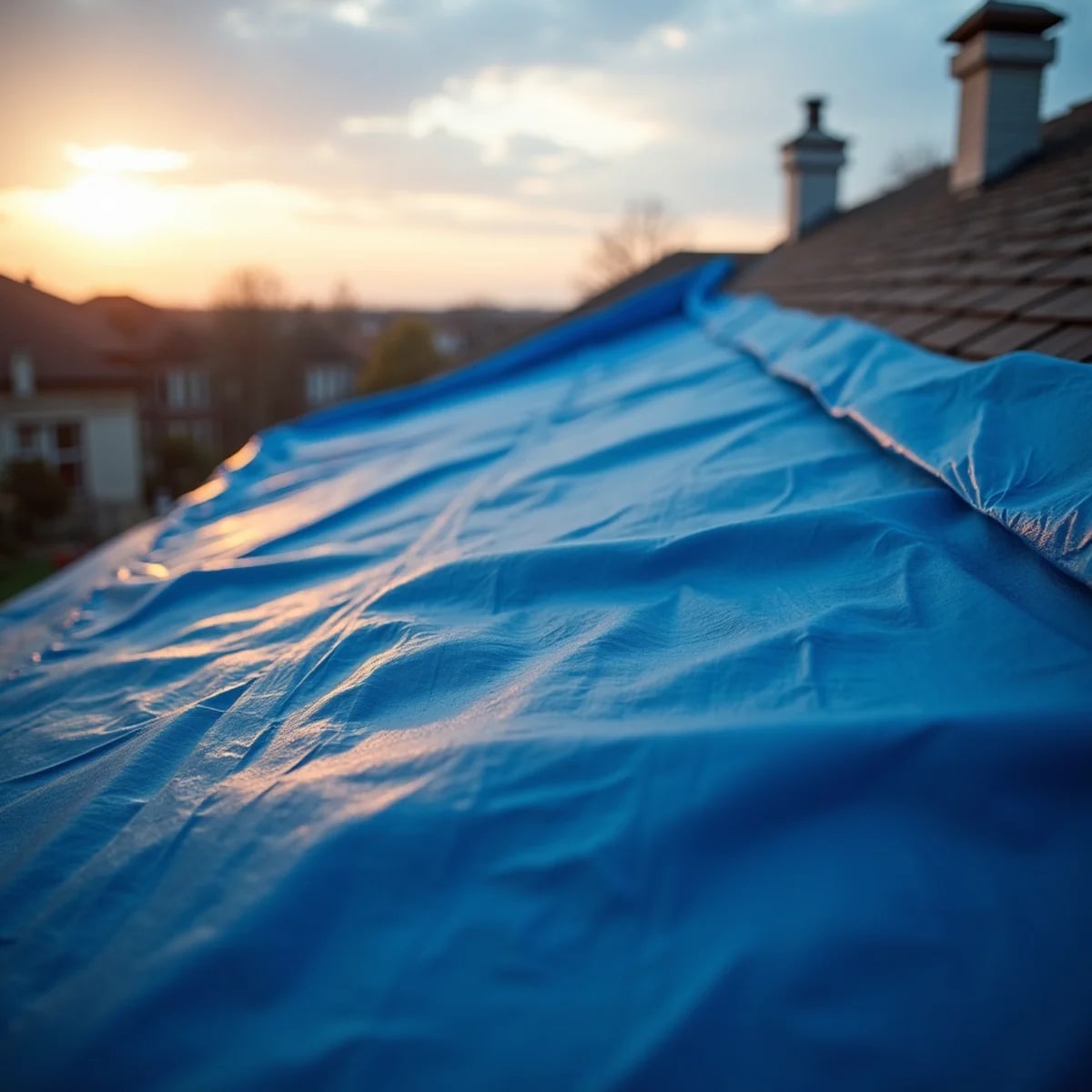 Storm Damage
Emergency Roof Tarping: What It Is, What It Costs, and When You Need It
A calm, safety-first guide to emergency roof tarping in Fort Worth — what a tarp actually protects, why you shouldn't climb a wet roof, what it costs, and how it fits your claim.
Read article Costs
CostsHow Much Does a Roof Replacement Cost in Fort Worth? (2026 Guide)
A clear, no-hype breakdown of what a new roof actually costs in Fort Worth in 2026 — by material, what moves the price, and how to get an exact number.
Read articleWhy homeowners trust us
Our Promise to You
No pressure, no gimmicks, no storm-chasing. Here's what every SkyCloak customer can count on — in writing.
- Free 21-point roof inspections
- Honest, repair-first recommendations
- Adjuster-ready photo documentation for claims
- In-house, background-checked crews
- Manufacturer warranties registered in your name
- Magnetic nail cleanup & final walkthrough
Fully Insured — General Liability Coverage
Proof of insurance provided before any work begins — just ask.
Free inspections
Put this advice to work on your roof
A free, no-pressure SkyCloak inspection turns everything you just read into a clear plan for your home — with photos and honest options.